National Workshop in Brasília Debates Climate Change, Health, and Labor in Brazilian Agriculture
National Workshop in Brasília Debates Climate Change, Health, and Labor in Brazilian Agriculture
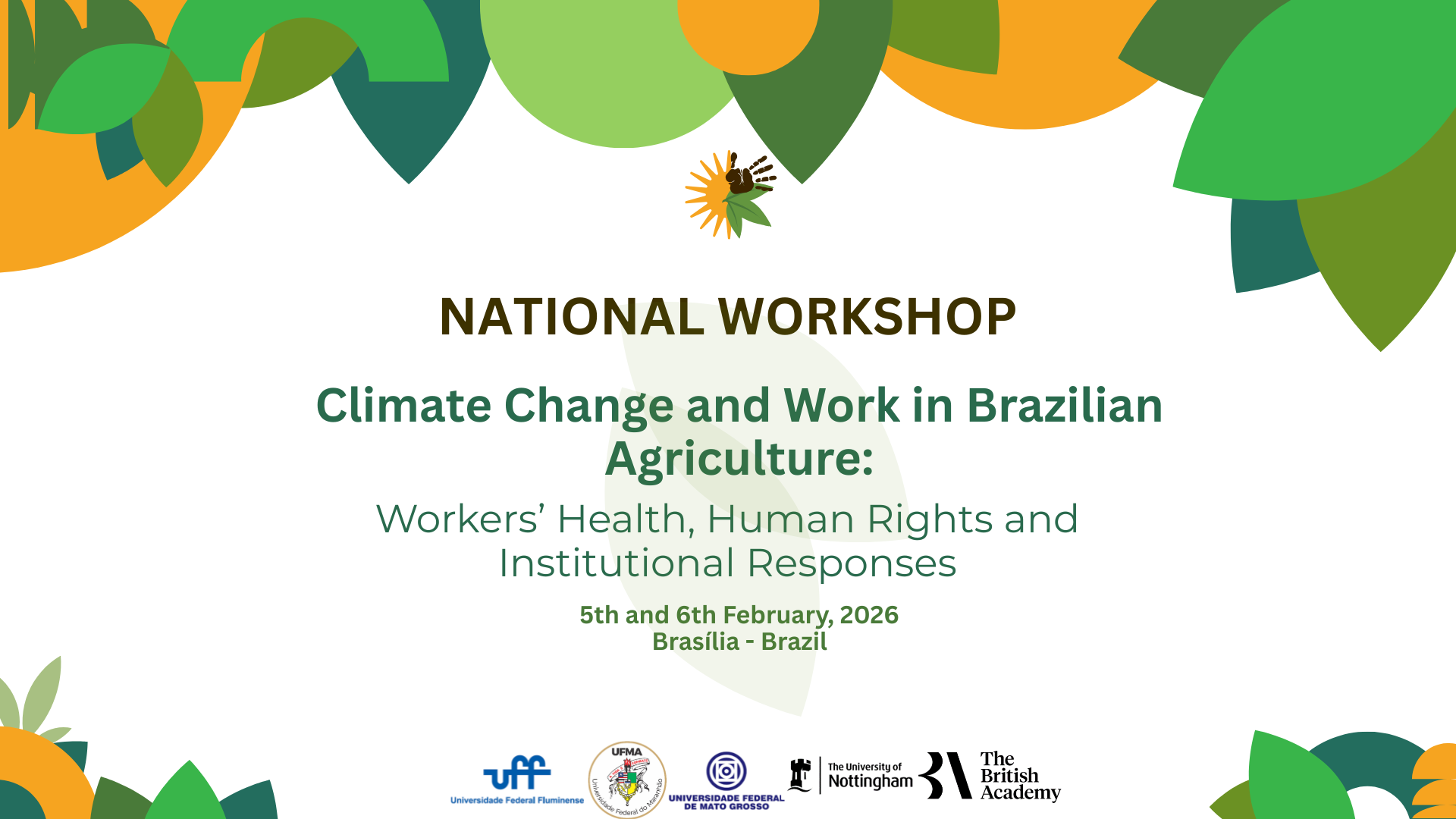
On February 5th and 6th, Brasília hosted the National Workshop on Climate Change and Labor in Brazilian Agriculture: Worker Health, Human Rights, and Institutional Responses. The event brought together researchers, public officials, judicial representatives, and members of social and labor movements. This initiative is part of a collaborative research project involving the Universidade Federal Fluminense (UFF), Universidade Federal do Maranhão (UFMA), and Universidade Federal do Mato Grosso (UFMT), alongside the University of Nottingham, Rights Lab, and with the support of The British Academy.
The workshop aimed to foster cross-sector dialogue regarding the impact of climate change on the working conditions and health of agricultural laborers. These discussions are intended to shape public policies grounded in the principles of climate justice, human rights, and decent work standards.
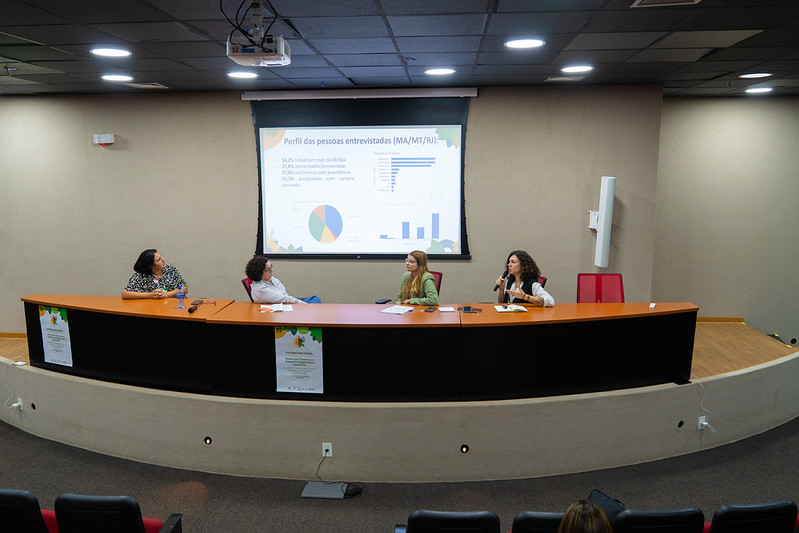
The programme included the presentation of research findings by Edgar Rodriguez-Huerta (University of Nottingham), as well as two thematic panels addressing the contemporary challenges of the climate crisis and agricultural labour. The first panel examined COP30 as a catalyst for institutional responses to the climate crisis. The second panel focused on living and working conditions in agriculture, discussing topics such as the Climate Plan, the impacts of extreme heat, the risks associated with pesticide use, and the effects of climate change on the health of rural workers. The organisers thank the moderators, panellists and participants for their valuable contributions.
Over the two-day event, participants organized into working groups to discuss local realities, the specific effects of climate change, and the ongoing challenges in protecting the rights and health of rural workers. These deliberations will serve as the foundation for a formal report featuring recommendations to strengthen public policies in the sector.
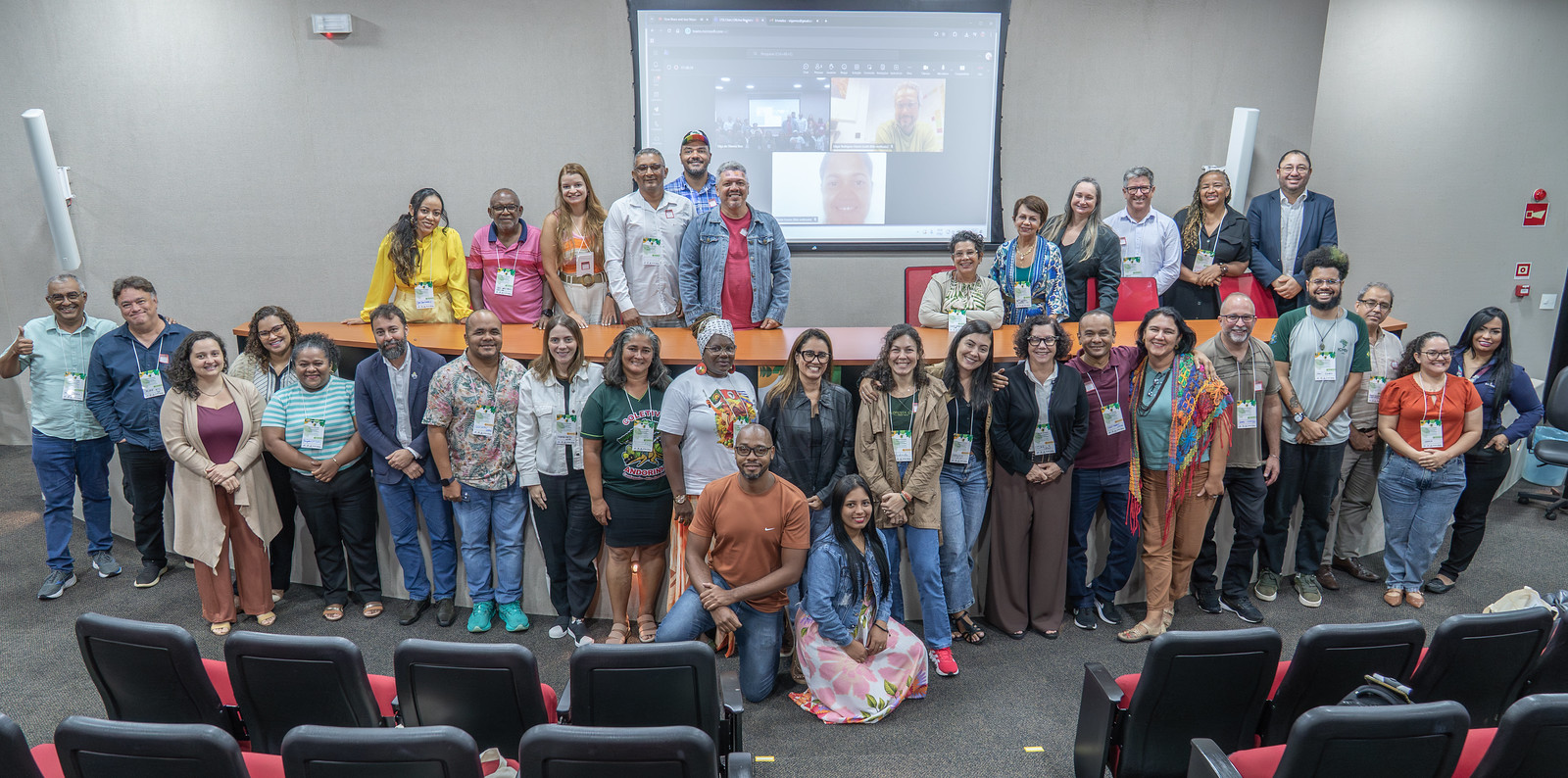
The event strengthened cooperation networks between universities, the State, and civil society, reinforcing a collective front against the challenges imposed by the climate crisis. Congratulations to the research team who led the organization, debates, and activities: Isabel Domingos, Flávia Moura, Carla Reita, Ludmila Paiva, Laert Moraes, Manuella Gallego, Mayara Fortes, Saulo da Costa, Ivi Castillero, Mariana Soares e Kesley Coutinho. A special thank you for the support from Priscila Gomes, Olga Rios, and Claudia Fidelis (staff), and Marília Dias (design).
Over the two-day event, participants organized into working groups to discuss local realities, the specific effects of climate change, and the ongoing challenges in protecting the rights and health of rural workers. These deliberations will serve as the foundation for a formal report featuring recommendations to strengthen public policies in the sector.
The event strengthened cooperation networks between universities, the State, and civil society, reinforcing a collective front against the challenges imposed by the climate crisis. Congratulations to the research team who led the organization, debates, and activities: Isabel Domingos, Flávia Moura, Carla Reita, Ludmila Paiva, Laert Moraes, Manuella Gallego, Mayara Fortes, Saulo da Costa, Ivi Castillero, Mariana Soares e Kesley Coutinho. A special thank you for the support from Priscila Gomes, Olga Rios, and Claudia Fidelis (staff), and Marília Dias (design).
#ClimateJustice #DecentWork #BrazilianAgriculture #ScientificResearch #WorkerHealth